What the Sign Doesn't Say: A Critical Eye at UK Primate Enclosures
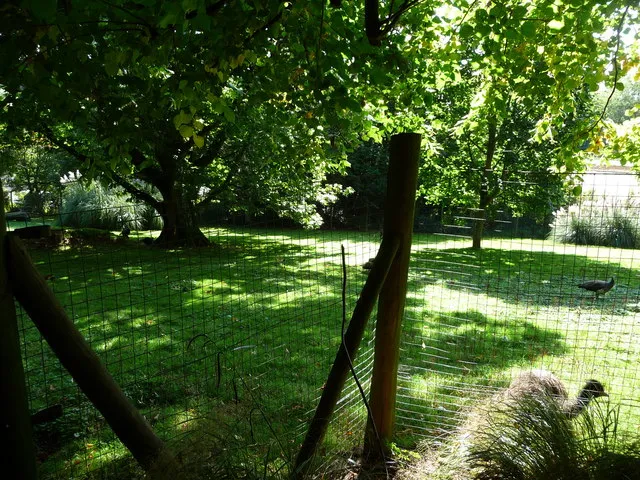
Photo: Lewis Clarke, CC BY-SA 2.0, via Wikimedia Commons
You're standing in front of a glass wall somewhere in Britain on a grey Saturday. Inside, a group of macaques are doing macaque things, which mostly means sitting. Beside you there's a smart panel with a photograph, a Latin name, a red icon and a sentence beginning "In the wild, this species faces…"
Most people read that panel for about four seconds. That's the wrong number of seconds. Signage is one of the few places where a zoo makes checkable statements in public, and a bit of healthy scepticism turns an ordinary day out into something closer to actual science literacy.
Three messages, one panel
The educational message is the obvious one: species, range, diet, threats. The marketing message is the photograph of a baby and the word "charismatic", probably not literally, but in spirit. The third message is quieter — it's the reassurance that this animal is here for good reasons.
That third message is the one worth interrogating. Not because zoos are lying, but because reasons get compressed into slogans, and slogans are hard to audit.
"Endangered" — where, and as of when?
Red List categories drift. A species can go from Endangered to Critically Endangered between one sign and the next, and plenty of panels in the UK are older than the last assessment. Check the authority named. If it says IUCN, look up the assessment year on your phone. If no authority is named at all, treat the word "endangered" as decorative until proven otherwise.
Then ask: endangered where? A species can be common in captivity and vanishing in one range state. Global status and local status aren't the same thing, and good signage is specific about which one it means.
Breeding programme claims
Phrases like "part of a coordinated European breeding programme" are usually true in the narrow sense — there is a studbook, there is a coordinator, animals are matched genetically. That's genuinely useful population management.
What the sign often leaves out is the link to the wild. Breeding in a zoo is conservation relevant; it becomes conservation action when animals go back. So ask the follow-up: how many have been released, where, and did they survive? Some UK institutions have honest, well-documented reintroduction and reinforcement work, and they tend to shout about numbers. If a panel mentions a programme but no outcomes, it's not necessarily spin — but it's incomplete.
The "rescued" backstory
A surprising number of primates in UK collections arrived via the pet trade, from laboratories, or from owners who couldn't cope. That's a real welfare success, and the story is genuinely worth telling.
But be alert to the difference between sanctuary and zoo, and to what "rescue" implies for the animal's future. A rescue that becomes a breeding exhibit has changed its purpose. Not automatically wrong — but the sign should be clear about it rather than letting a single emotive word do all the work.
Look past the panel
The enclosure tells you things the text won't.
- Can the animal get away from you? Visual barriers, retreat spaces, off-show areas. If there's nowhere to hide from visitors, that's a design problem.
- Is the space proportionate? Apes and monkeys with big home ranges in the wild need vertical space, complexity and things to do. Compare the enclosure to the panel's own description of the species' habitat.
- Who's in there? Solitary individuals of a naturally social species, or odd groupings, are worth a question. Sometimes there's a reason (recent introduction, veterinary separation) that staff will happily explain.
- What's the enrichment rotation? Scatter feed, puzzle feeders, browse, substrate. Signs rarely mention enrichment schedules, but staff usually do.
Read the small print — then use your rights
In the UK, zoos are licensed and inspected by the local authority under the Zoo Licensing Act 1981, against the Secretary of State's Standards of Modern Zoo Practice. BIAZA membership is a voluntary extra step, not a legal requirement, so "BIAZA member" is a meaningful signal but not a guarantee, and non-membership isn't evidence of neglect.
The genuinely useful bit: inspection reports are public documents in many council areas. A polite request to the licensing team usually gets you one. You'll learn more about an enclosure's welfare record from two pages of an inspector's findings than from every panel on site.
Six questions to carry round with you
- Which authority, and which year, for that conservation status?
- Is the claim about this species globally, or in one country?
- Does the breeding programme have documented releases?
- What does "rescued" mean here — and what happens next?
- Can the animal remove itself from public view?
- Who inspects this place, and can I see the report?
None of this requires being hostile. Keepers are usually the best-informed people on site and mostly delighted to be asked something other than where the toilets are. A good question gets you a better visit than a photograph of a sleeping animal ever will.
What good signage looks like
When you find it, notice it. Dated assessments, named authorities, honest acknowledgement of uncertainty, enclosure labels that match the animals actually in front of you, and programme claims that include outcomes rather than just membership. It exists, and it's getting better.
The visitor's job isn't to catch anyone out. It's to hold the panel to the standard the panel set for itself. Four seconds is not enough. Try forty.