When the Heating Goes On: A Field Guide to Winter Enrichment in UK Primate Houses
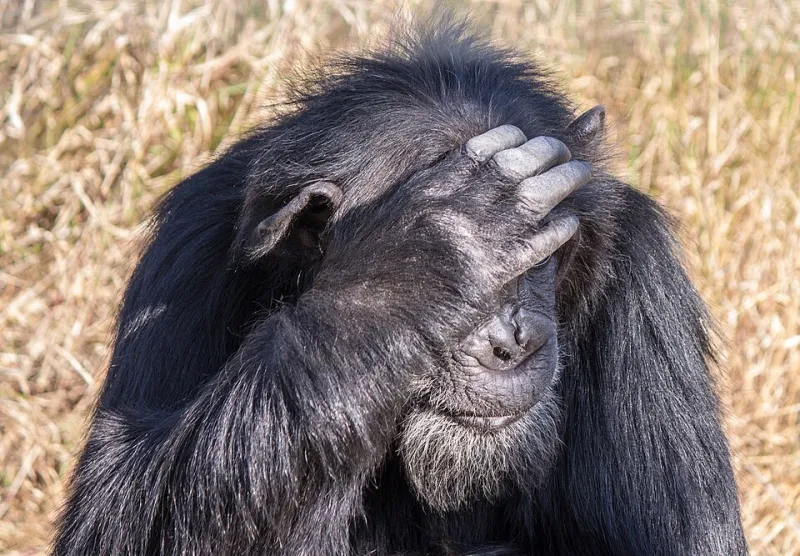
Photo: Ray in Manila, CC BY 2.0, via Wikimedia Commons
There's a particular smell to a primate house in November: damp wellies, disinfectant, and the slightly over-warm air of a building that's been shut up since the clocks went back. Out in the run, a group of macaques that spent October digging through bark chips is now indoors, and the enrichment rota on the keeper-room wall has been quietly rewritten. This is the winter enrichment rotation, and it's one of the most interesting times of year to watch captive primates — if you know what you're looking at.
Why winter housing changes the picture
Most of the primates in UK collections are tropical or subtropical species. Cotton-top tamarins, common marmosets, lion-tailed macaques, gorillas and chimps all need indoor quarters with controlled temperature, and many houses add supplementary UV lighting to compensate for a British winter that offers roughly the daylight of an unlit cupboard.
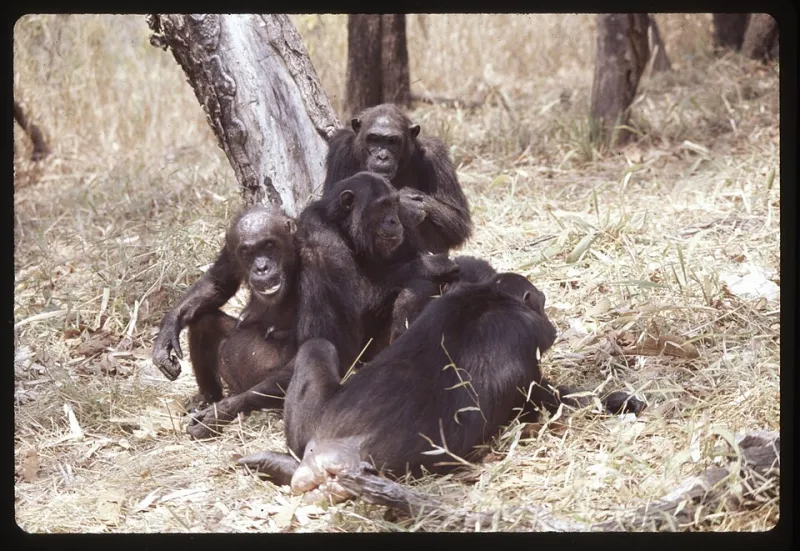
That means less space, more enforced proximity, and fewer of the loose, spread-out foraging opportunities that outdoor enclosures provide. Behaviour doesn't just continue unchanged in a smaller room — it narrows and reshuffles. Keepers describe the shift in fairly consistent terms: animals move less, sit closer together, and the small social frictions that would normally be dissolved by twenty metres of grass suddenly have nowhere to go.
What the rotation actually is
Enrichment rotation is not a box of toys tipped out on a Monday. It's a schedule, often reviewed weekly, that cycles different categories of stimulation so novelty doesn't wear off: puzzle feeders, scatter feeds, frozen and hanging items, browse, scent trails, destructible materials, and simple novel objects that are inspected, ignored, then rediscovered two weeks later.
The logic is habituation. A feeder that's been in the enclosure for a fortnight is furniture. Rotating it out and bringing it back restores some of its problem-solving value. Good keepers keep records — what went in, when, who interacted, who ignored it — because the whole exercise only means something if the reaction is documented.
What keepers are actually watching for
Boredom signals (with caveats)
Inactivity is the obvious one, but it's a terrible standalone measure. A sleeping primate is not necessarily an unhappy one, and a busy one is not necessarily thriving. What keepers tend to flag instead are specific patterns: pacing along a door frame, over-grooming to the point of bald patches, hair plucking in marmosets, regurgitation and reingestion in great apes, and repetitive door-testing.
Social tension
Crowding is a pressure, not a verdict. Watch for feeding-time supplanting (one animal displacing another from a food source), a drop in allogrooming, more huddling than usual, and an increase in brief, noisy scuffles. A well-run house usually has some way for a low-ranking animal to get out of line of sight, and keepers will be checking that the indoor furniture still allows that.
Novel object use
This is the fun part. When a new item appears, the useful things to note are latency to approach, who investigates first, whether the group learns from that individual, and whether the object gets used for something the keeper didn't intend. Animals that solve a puzzle and animals that wait to scrounge from the solver are showing two different, equally valid, strategies.
Reading it without overclaiming
Boredom is a real welfare concept in the scientific literature, but it's also a word that gets thrown around loosely in visitor conversations. A single afternoon of inactivity tells you almost nothing. What you need is a baseline — what does this group normally do — and then a record of change.
Three honest caveats for anyone writing up observations:
- Confounds are everywhere. Visitor numbers, cleaning schedules, a change of keeper, a warm spell, or a vet visit can all move behaviour as much as a new feeder.
- Individual differences matter. Age, sex, rank and temperament all shape response. A group average can hide a lot.
- Your presence is a variable. Primates watch people. Standing at the glass in a red coat every day is an intervention, not a neutral observation.
Cold-weather observation tips
- Check opening hours first. Several UK collections run reduced winter hours and close some indoor houses for deep cleaning, so ring ahead or check the website.
- Arrive early. Enrichment often goes in before opening, and the first hour after doors opens is when the reaction is freshest.
- Use a simple ethogram and scan sampling. Every two minutes, record what each visible animal is doing in one category: feed, forage, rest, groom, move, social-affiliate, agonistic. Ten-minute blocks are plenty for a beginner.
- Note the conditions. Indoor temperature, whether the UV lamps are on, how many enrichment items are visible, and how many visitors are in the house. Write it down; future-you will be grateful.
- Follow house rules. Boot dips, no flash photography, no tapping glass, no food. These exist for biosecurity and for the animals' sake, not to spoil your afternoon.
- Ask questions. Keepers are usually delighted to explain why a particular feeder is out this week, and their answers are far better than anything you'll infer from the glass.
Turning a winter visit into something useful
Plenty of UK sanctuaries and zoos already collect enrichment records, and a tidy, well-labelled set of student observations can be genuinely welcome — but only if it's requested. Offer before you collect. A short note to the education officer explaining your method, your sampling interval and what you'll do with the data is the difference between a contribution and an imposition.
And if you come away with nothing more than a clearer sense of how much thought goes into a single puzzle feeder on a wet Tuesday in February, that's still a decent result. Winter housing strips away the easy foraging, which means the behaviour you see indoors is often the most legible behaviour of the year. Watch carefully, write it down, and resist the urge to narrate.