Rocket Science: Reading Primate Stress Through the UK's Loudest Weeks
The first rocket of the season is rarely the one that matters. For a primate in a UK sanctuary, the problem is usually not a single bang but a fortnight of them: Bonfire Night on 5 November, Diwali celebrations around the same week, neighbourhood parties that ignore the calendar, and then New Year's Eve. By the time the last rocket fades, keepers have learned a lot about individual animals, and about how hard it is to separate real stress from human guesswork.
That is not a reason to shrug. It is a reason to look closely. Firework season is a useful case study in animal welfare because it asks sanctuaries to do three things at once: observe behaviour, prepare the environment and communicate honestly about what they can and cannot control.
What the evidence can actually tell us
Cortisol is the headline hormone in these conversations, and it is easy to make it say too much. Keepers and researchers often measure cortisol metabolites in faeces rather than blood, because sampling is less invasive. A rise can indicate arousal, but it can also reflect exercise, social tension, illness, a vet visit or a change in routine. Good studies need baseline samples, consistent timing and control periods. A spike after fireworks is interesting. It does not, on its own, tell you that an individual primate is experiencing the same thing as a human with a phobia.
Behaviour is more immediate, and often more useful. Keepers look for startle responses, freezing, increased scanning, retreat to the back of an enclosure, reduced feeding, unusual vocalisations, clingier social contact or disturbed sleep. Many sanctuaries use simple ethograms: a fixed list of behaviours recorded at set times. That is citizen science in its most practical form, and it beats a keeper's vague memory of 'they seemed fine'.
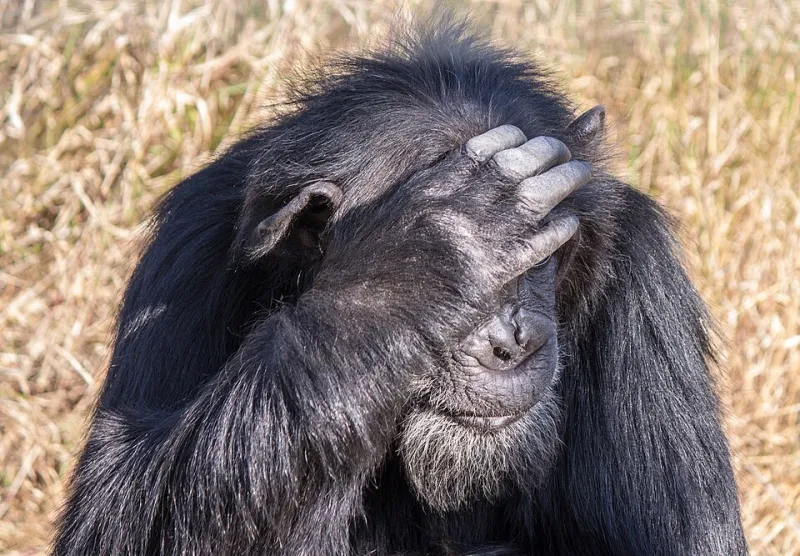
Absence of visible panic is not proof of calm. Some primates freeze. Others become quieter for days. Species differ, individuals differ, and an animal with a history of poor social housing may react differently from one in a stable group. Anthropomorphism is not the enemy here, but it is a unreliable narrator. A monkey covering its head is not 'asking for quiet' in human terms. It is still a useful cue that the animal is seeking cover.
The sanctuary playbook
Most UK primate sanctuaries cannot simply move every animal into a soundproof room. Many have outdoor enclosures with heated indoor quarters, and some species are better able to use indoor space than others. The practical protocols tend to be unglamorous and repetitive.
Before the loud weeks, staff record baselines, check hides and visual barriers, secure roofs and fences, test radios or white-noise machines, and adjust feeding and cleaning to quieter times. They may avoid new social groupings and prepare enrichment that occupies hands and minds: frozen food, puzzle feeders, extra bedding, safe nesting material. Recorded firework sounds played at low volume and paired with positive reinforcement can help some animals, but only as part of a careful plan. Rushed desensitisation can make things worse.
During the season, staff may be on site or on call. Lights are kept low where possible, routines are kept steady, and unnecessary entering is avoided. Keepers check water, heat and ventilation, especially if animals are indoors. After the last rocket, they check for injuries, escape attempts, appetite changes and stress carry-over, then review their notes.
One of the most useful things a sanctuary can do is talk to neighbours and local display organisers early. Low-noise fireworks are not silent, and quiet displays still need preparation. The aim is not to wrap primates in cotton wool. It is to make the loud weeks more predictable and to give animals more choices about where to be.
What visitors can do
Visitors are not passive. The simplest help is to follow the sanctuary's firework-season guidance. If they ask people to stay away on loud evenings, that is welfare, not unfriendliness. Book daytime visits, keep voices low near enclosures, and leave sparklers, balloons, loud toys and drones at home.
Ask what enrichment is on the wish list and donate if you can. If you are hosting a display, choose low-noise products, tell neighbours, and check whether a sanctuary is nearby. If you volunteer, use the sanctuary's recording sheets rather than inventing your own categories. One careful observation is worth more than a confident guess.
And be careful with social media. A video of a frightened primate can raise awareness, but it can also turn distress into entertainment. Share verified guidance instead. As Diwali continues and New Year approaches, the best support is evidence-led, unglamorous and local.