The Meet-and-Greet Clause: Reading UK Primate Encounters Like a Welfare Auditor
Lemur walks. Owl-monkey photo sessions. 'Keeper for a day' packages with a primate cameo. In 2026, the UK encounter market is broad, polished and very good at selling a moment. That does not make every experience bad. It does mean you need to read it like a field note, not a holiday advert.
The awkward question is simple: what does the animal get from this? A genuine conservation encounter can fund care, sharpen public understanding and put money behind habitat work. A less genuine one can be theatre with a welfare disclaimer. The difference is rarely in the brochure font. It is in the details you have to ask for.
First, separate 'encounter' from 'handling'
Encounter is a flexible word. It can mean watching a group from a quiet walkway while a keeper talks. It can mean stepping inside an enclosure. It can mean feeding, touching or posing with an animal on your shoulder. Those are not the same product, and they do not carry the same welfare questions.
Before you pay, ask exactly what contact is involved. Hands-on handling? Food passing? Photography with the animal unrestrained? Is the animal free to leave? How many people are in the session? How long does it last? Who chooses the animal, and can that animal simply say no?
A good operator will answer these questions without bristling. A vague operator will say 'it's all very ethical' and change the subject. That is not an answer. It is a marketing reflex.
Decode the welfare words
'Natural', 'enriching', 'conservation-focused' and 'ethical' are not regulated claims. They are mood music. Look for evidence instead.
Ask for a written protocol. Does it state a maximum group size, session length and rest period? Does it explain how the animal can retreat? Does it say what happens if the animal is unwell, stressed or simply uninterested? Does it name a vet or a qualified behaviour specialist? If the answer is 'the keeper knows the animal', fine, but that is not a protocol. It is a relationship, and relationships need backup.
Conservation claims deserve the same treatment. 'Supports conservation' could mean a donation to a named project, staff involvement in field work, or a poster near the till. Ask which project, how much, and whether you can see published information. Small contributions are not automatically meaningless. Undocumented ones are just hard to audit.
Watch the animal, not the audience
If you can, ask to see an unedited video of a session before booking. Better still, ask whether you can visit the public side of the collection without buying the encounter. Watch how the animals behave before any money changes hands.
Relaxed animals are not necessarily performing. They may be curious, calm, or simply going about their day. Warning signs include an animal that keeps trying to leave, hides, paces repetitively, overgrooms, or stays glued to a door. A primate that is repeatedly picked up, crowded or woken for a photo is not having a neutral day.
Choice matters. Good welfare is not just good food and a clean enclosure; it is the ability to control what happens next. If the animal cannot move away, avoid the crowd or end the interaction, the experience is being run for the visitor, not the primate.
Questions worth asking before you book
- What species, age and sex is the animal, and how is it housed socially?
- Is handling involved, or only observation and feeding?
- How many visitors per session, and how long is the animal available?
- Can the animal choose to leave, and what happens if it does?
- How often does the same animal do sessions, and what rest days does it get?
- Who is supervising, and what training do they have?
- What is the biosecurity policy, including hand hygiene and illness rules?
- Which conservation project is supported, and how can I verify it?
- Can I see the relevant licence or recent inspection report?
That last one is not rude. In the UK, animal businesses and zoos sit within a licensing and inspection landscape that varies across nations and councils. Not every good collection is a BIAZA member, and not every BIAZA member runs encounters. But paperwork is a useful starting point, not a substitute for watching the animals.
The education test
A proper educational encounter should leave you knowing more about the species than you did at the till. You should learn something about its wild range, social life, diet, threats and the conservation work that matters. You should come away able to explain why the animal is not a pet and why its habitat is under pressure.
If the main product is a photo, that is entertainment. Entertainment is not a crime, but it should be priced and described honestly. The red flag is when entertainment borrows the language of conservation without doing the work.
Lemurs and owl monkeys are not props
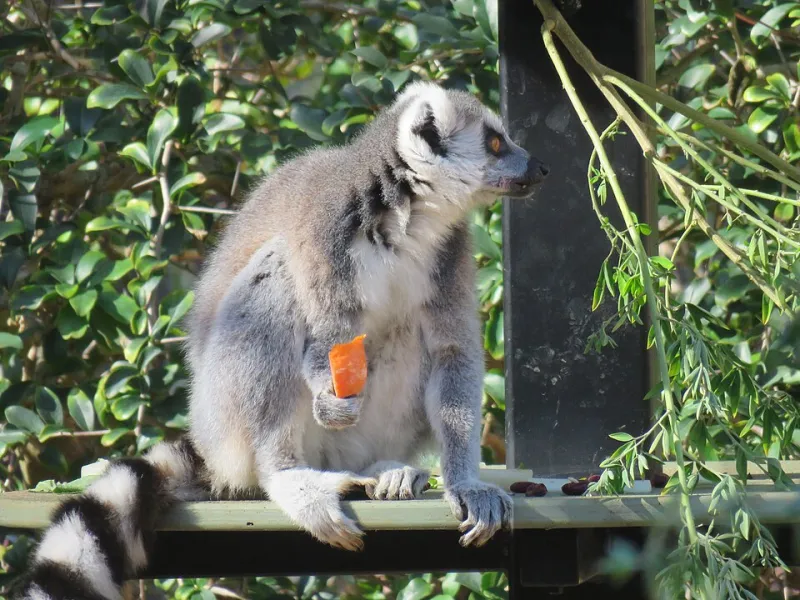
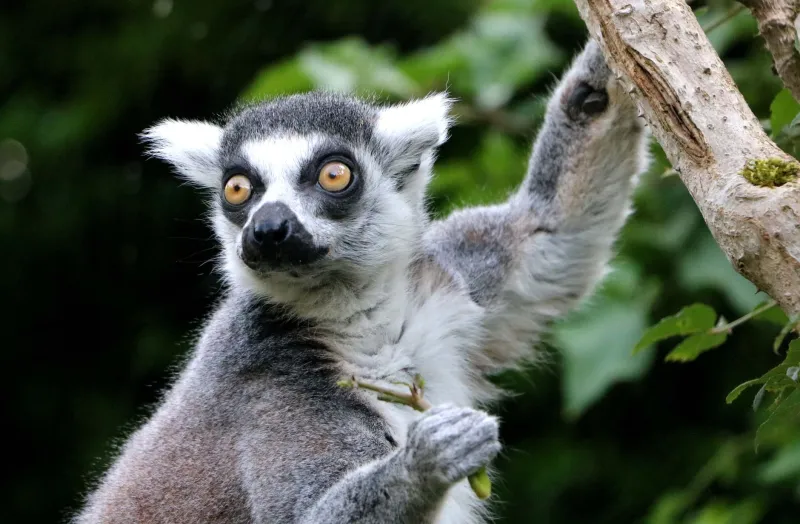
Ring-tailed lemurs are social, scent-oriented primates with complex group lives. They are also frequently used in encounter marketing because they look charismatic and familiar. That does not mean they are suited to being passed around a room. Ask how scent marking, group stability and retreat space are managed.
Owl monkeys bring a different issue: they are nocturnal. A daytime photo session may be quiet and orderly for humans while cutting into an animal's rest period. Ask about lighting, scheduling and whether the animals are ever disturbed during their active hours. 'They seem fine' is not the same as 'the schedule respects their biology'.
Red flags and green flags
Red flags: guaranteed handling, no age limits, animals woken for photographs, crowded sessions, no retreat space, pressure to book immediately, no named location, no licence details, and conservation claims that evaporate when questioned.
Green flags: clear species and group information, limited session sizes, no forced contact, an animal-initiated interaction, trained staff, quiet spaces, sensible hygiene rules, a named conservation partner and a willingness to say no to visitors when the animal needs a day off.
The bottom line
You do not have to boycott every primate encounter. You do have to stop treating the brochure as a welfare report. Ask the awkward questions, watch the animal's behaviour, and be willing to walk away. A good encounter should feel like a carefully managed education, not a queue for a cuddle. If the primate cannot choose, you are not meeting a primate. You are meeting a business model.