Snap Decisions: Why UK Primate Sanctuaries Need Photography Rules With Teeth
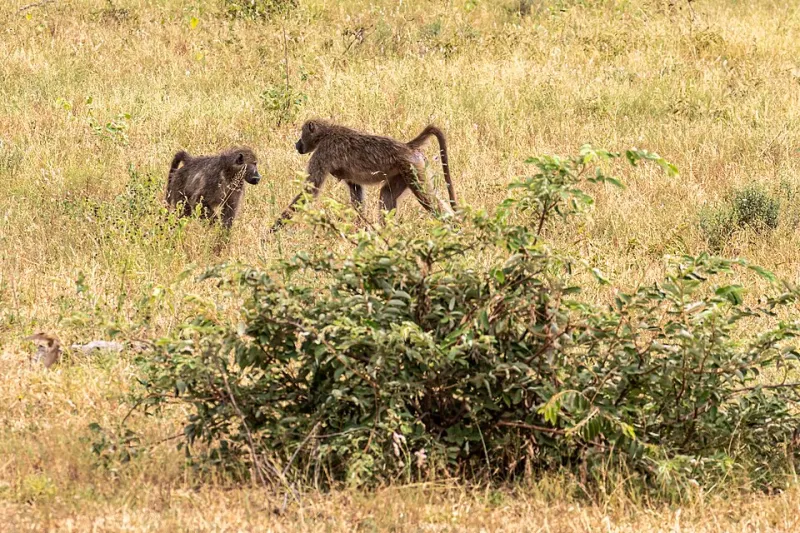
Photo: Dietmar Rabich, CC BY-SA 4.0, via Wikimedia Commons
There is a small laminated sign at many UK primate sanctuaries. It shows a camera with a red line through it, or a flash symbol with a friendly 'please turn off'. It is a good start. It is also, in 2026, about as much protection as a paper umbrella in a thunderstorm. Visitors carry phones with multiple lenses, LED lights, autofocus assists and a compulsion to capture everything. The primates, meanwhile, cannot read the sticker.
The gap between the sign and the experience
A 'no flash' rule addresses one obvious stressor. It does not address the slow creep forward of a phone pressed to glass, the tap-tap-tap to get a reaction, the ring light, the shutter sound, the selfie stick, or the small crowd that forms when one person stops. For a primate, these are not separate events. They are a bundle of attention, proximity and novelty — sometimes enriching, often annoying, occasionally alarming.
Welfare signals are not always dramatic. An animal may turn its head away, stop feeding, retreat to the back of the enclosure, lip-smack repeatedly, yawn, scratch or glance at the exit. Keepers notice these shifts because they know the baseline. A visitor with a phone may notice only that the animal 'looked sad' in the photo. The gap between those two readings is where sanctuaries need to work harder.
Why conservation messaging complicates the picture
Sanctuaries want visitors to share what they see. A photo of a gibbon swinging through a well-designed enclosure can do more for conservation awareness than a hundred leaflets. That is a real benefit. But the message can curdle if the image is captured by ignoring the animal's behaviour. There is an awkward tension between 'come and see our primates' and 'please stop trying to get them to pose'.
Clearer rules would help everyone. Not because visitors are villains — most are simply excited — but because ambiguity puts keepers in a horrible position. Staff end up policing phones instead of talking about habitat loss. Visitors feel scolded for something the sign did not actually prohibit. The animals absorb the confusion.
What better photography policies could look like
First, separate flash from everything else. A sticker that only says 'no flash' implies flashless photography is always fine. It is not. Sanctuaries could use a simple three-zone system: open photography, quiet photography with no glass-tapping or prolonged close-up, and photo-free zones near resting or nursery areas. The zones should be visible on maps and marked on the ground, not buried in a leaflet.
Second, write the rule in behaviour, not equipment. 'Do not tap the glass' is clear. 'Do not crowd the viewing window' is clear. 'Do not use selfie sticks' is clear. 'Be considerate' is not. Staff can script a friendly line: 'If the primate looks away, please step back — that is their way of asking for space.' That gives visitors a response they can actually follow.
Third, give people a better photo option. A designated viewing point with a clean sightline, no flash and a staff member on hand can reduce the urge to push boundaries. Some sites already run timed photo sessions or use fixed cameras. That is not anti-photography. It is pro-welfare.
What visitors can do tomorrow
Use zoom instead of proximity. Turn off flash and, where possible, the shutter sound. Do not tap glass, wave food or make kissy noises. Watch the animal's reaction, not just the screen. If it moves away, stop. If a keeper asks you to step back, step back without debate. And think twice before posting a selfie with a primate behind you — the animal did not consent to being a backdrop.
What keepers and managers can do next
Audit incidents, not just intentions. Note when phones cause crowding, when primates react, and which signs are ignored. Review the wording with visitors, not only staff. Model the behaviour you want: put the phone down, narrate what the animal is doing, and show that watching is enough. A sanctuary that treats photography as part of welfare, rather than a nuisance to be tolerated, will send a stronger conservation message than any slogan.
The primates cannot read the sticker. The rest of us can. It is time the rules said what they actually mean.