Marmoset Moves: How to Read UK Primate Rescue Intake Records Without Missing the Point

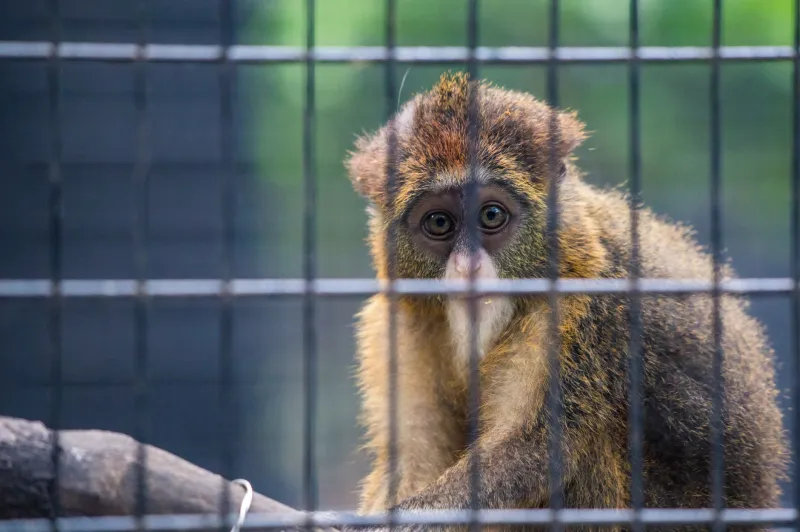
Photo: Billy McCrorie , CC BY-SA 2.0, via Wikimedia Commons
Rescue intake records have a way of turning into headlines. A spreadsheet shows dozens of marmosets surrendered, a charity notes a rise in calls, and suddenly the story is 'Britain's pet monkey crisis'. The numbers matter. But a record is not a verdict. It is a snapshot of animals that reached a rescue, described by people who were often under pressure, and coded by staff who need consistent categories more than perfect stories.
For students and wildlife fans, that makes rescue data a good place to practise critical reading. The question is not just 'how many?' but 'how was this counted, what is missing, and what would change my mind?'
What an intake record actually contains
Anonymised records from UK primate rescues typically include species, sex, age, origin, date of intake, reason for surrender and sometimes a postcode district or owner type. Not every rescue uses the same fields. One may code 'behaviour' as a single category; another separates 'bite', 'social conflict' and 'sexual maturity'. A record can say 'owner moved house' without saying whether the owner tried to rehome privately first. It can say 'allergy' without a medical note. It can say 'marmoset' without subspecies.
Most importantly, intake records count animals that entered rescue. They do not count primates sold privately, kept until death, dumped, transferred between owners or never reported. They are a lagging indicator, not a prevalence survey.
The species pattern, and why it matters
In summaries of UK rescue intake, small callitrichids such as marmosets and tamarins often appear prominently. They are social, scent-marking, long-lived and capable of breeding quickly. They are also small enough to be advertised as manageable, and cheap enough to be bought on impulse. That combination can produce a supply of animals that outgrows a kitchen or a spare room.
Squirrel monkeys and larger primates appear too, but their records can look different: fewer animals, harder placements, higher costs. Species totals tell you about rescue demand and rescue specialism as much as about owner demand. A rescue known for marmosets will receive marmosets. That does not mean marmosets are the only primate being kept badly.
Owner expectations are the quiet theme. A primate that was 'cuddly' as an infant may become territorial, bite, or need a social group. A pair may breed. A diet based on fruit may be wrong. A licence may be needed, and a landlord may object. The stated reason on the form is the end of a story, not the start.
The licensing gap behind the numbers
The UK does not have a single, simple pet primate law. In England and Wales, the Dangerous Wild Animals Act 1976 requires a local authority licence for many primates. Scotland and Northern Ireland have their own arrangements, and general welfare law sits alongside. Local enforcement varies. A licence can show that a keeper met conditions on one day. It is not a lifetime welfare guarantee.
Rescue records cannot tell you how many animals were kept without a licence, because the form rarely asks and the owner may not know. Policy lessons are therefore modest but useful. Intake data can show where rescue capacity is stretched, which species are hardest to rehome, and which owner circumstances keep appearing. It can support calls for better breeder regulation, online sales checks, microchipping, surrender support and public education. It cannot, by itself, prove that a ban would work or that every owner is irresponsible.
How to read a rescue stat like a scientist
Start with the denominator. Ten surrenders in a year is different from ten in a decade, and ten from one rescue is not a national total. Ask who collected the data. A rescue's own records are valuable, but they are not independent research.
Ask what counts as a rescue. Sanctuaries, zoos, vets and informal rehomers may all use different definitions. Check whether reasons are coded consistently. 'Behaviour' can mean biting, breeding, noise or social conflict. Separate welfare claims from conservation claims. The UK pet trade is largely captive-bred, but demand still has conservation and disease-risk implications.
Finally, ask what would change your mind. A good dataset should be able to surprise you. If every number confirms what you already thought, you are probably reading a campaign slogan rather than a dataset.
The postcode primate is not one animal but a pattern. Read the method before the headline. Ask for the denominator. Support rescues that publish clear data. And remember that the most important number is not how many primates were surrendered, but how many never needed to be.