The Green Card: What a Primate Browse Board Really Tells You
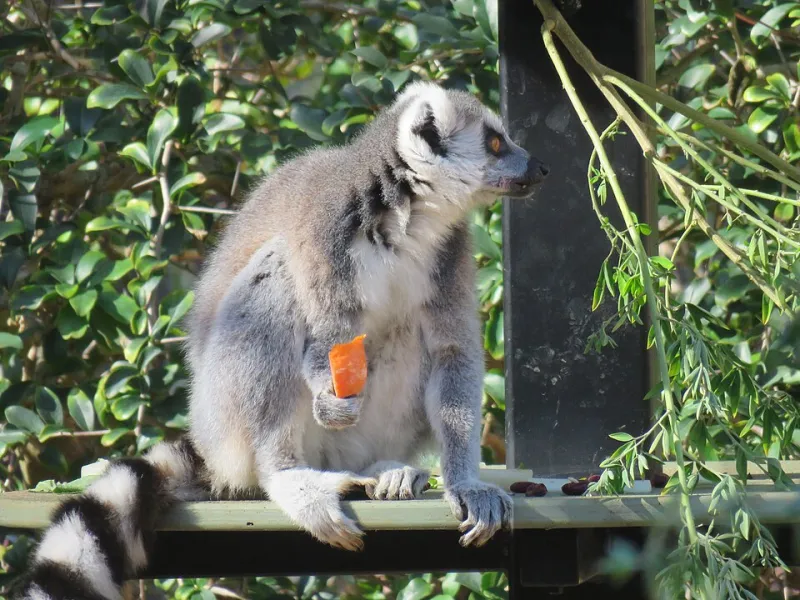
Photo: Calistemon, CC BY-SA 4.0, via Wikimedia Commons
Walk past a primate house in late autumn and you may spot a keeper pushing a wheelbarrow of bramble, hazel and willow. Nearby, a whiteboard or laminated sheet lists what is going in that day. It looks humble. It is also one of the more revealing documents in the collection.
Browse boards and diet sheets tell you what animals are eating, but they also hint at sourcing, seasonality, staff knowledge and risk management. Read one carefully and you learn less about decoration and more about conservation practice.
Browse is not a garnish
In primate keeping, browse means plant material offered for feeding and foraging: leaves, twigs, bark, flowers and sometimes roots. It is nutrition, but it is also behaviour. Chewing, stripping bark and searching through branches takes time. For many species, that is the point. A pile of cut willow can turn a quiet afternoon into an active one.
So when a board says “bramble, hazel, rose” it is not listing table decorations. It is describing a meal and an enrichment session in one. The useful question is not simply what is on the list, but why those plants, in that quantity, at that time of year.
Reading the green card
A good browse board or diet sheet usually gives more than plant names. Look for the species offered, the amount, the source, and any preparation notes. Does it say “bramble, washed” or just “bramble”? Does it name a supplier, a hedgerow, or a staff member’s garden? Is there a note about thorny material being cut back?
Those details matter. Bramble is useful but prickly; hazel and willow are familiar staples; rose can be popular, though thorns need managing. Keepers often vary the mix to match what is available and what the animals will actually work at. A board that changes with the seasons is usually a sign of active thinking, not inconsistency.
Late autumn and winter shifts
By November, UK hedgerows are thinning out. Leafy material is less abundant, and collections may lean more on woody browse: hazel sticks, willow with bark still on, bramble stems, and evergreen material from approved sources. This is where careful reading helps. Evergreen does not automatically mean safe. Some common garden plants are unsuitable or toxic to primates, and laurel is a classic example of a plant that should not be treated as casual browse.
The seasonal shift also affects foraging value. Bark and twigs can keep animals busy when fresh leaves are scarce, but they are not a direct swap for every nutrient in a summer diet. A board should reflect that balance, ideally alongside other food and a clear reason for what is being offered.
The risks behind the list
Three practical risks sit behind almost every browse board.
First, pesticide residues. Plant material gathered from gardens, allotments or verges may have been sprayed, and “natural” does not mean uncontaminated. A responsible collection should know its source and avoid uncertain material.
Second, toxic or unsuitable species. Laurel is the one to watch for in UK gardens, but it is not the only plant that can cause trouble. Identification matters, and so does having a second person check unfamiliar material.
Third, invasive plants and access. Japanese knotweed is a serious problem in the UK, and it should not be gathered, moved or fed. Landowner permission is also basic good practice. Hedgerow cutting without consent can damage habitat and land relations alike.
Questions worth asking
If you are a student, volunteer or curious visitor, ask friendly, specific questions. Where did the browse come from? Is it from the collection’s own ground, a supplier, or a staff garden? How do keepers check for pesticides and identify plants? What happens to thorny material? Is there a season when certain plants are avoided?
These are not gotcha questions. They are the same questions a good keeper asks before filling a wheelbarrow. A browse board is a small window into that decision-making. Read it as a supply chain, a welfare tool and a seasonal record, and the humble green card becomes far more interesting than a list of leaves.