The Five-Second Squint: Where Amateur Pain-Watching Ends and a Vet Begins
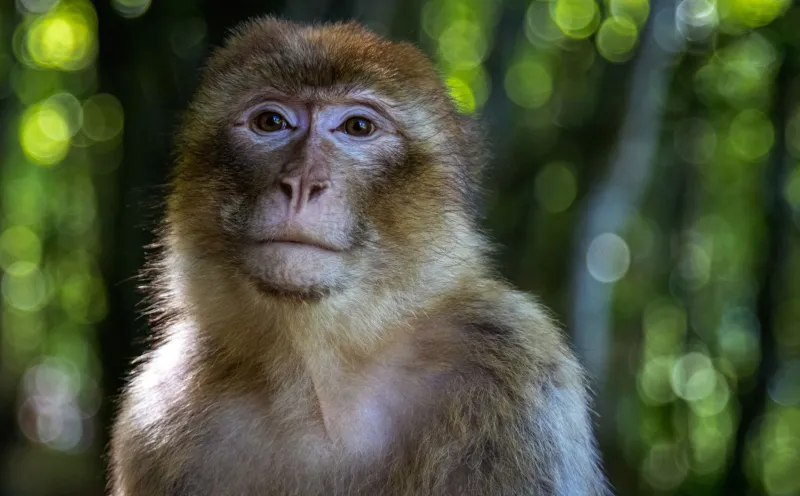
You are standing at the glass at a UK collection on a damp Tuesday in November. The animal on the shelf is doing nothing much. Eating, maybe. But something about the set of its brow is nagging at you, and you cannot decide whether you are seeing discomfort or just a primate being a primate. This is the exact moment grimace scales were invented for, and also the exact moment they are most often misused.
What a grimace scale actually is (and isn't)
A grimace scale is a short list of facial action units, each scored on a simple 0–1–2 scale, then added up. The idea began with rodents and has since been developed for several primate species, including macaques, langurs and chimpanzees, plus a few non-primates. The macaque version, for instance, looks at things like orbital tightening, brow bulge, ear stiffness, cheek flattening and whisker position. Each gets a number. The numbers are added. You get a score.
What you do not get is a diagnosis. A grimace scale is a screening instrument, validated mainly for acute pain in controlled settings — post-surgical recovery, for example, or a known injury being monitored. It is not a mood ring, and it is not a substitute for a clinical exam. The moment someone in a Facebook group says "I grimace-scaled my local zoo's spider monkey and it's definitely in pain", the tool has left its lane.
Why the scale is fussy about species, light and angle
Here's the boring bit that matters. The scales are species-specific because primate faces are not interchangeable. A chimpanzee's brow does not do what a macaque's brow does. Scoring a species with the wrong scale is like using a dog body condition chart on a ferret.
The second issue is the image. Grimace scales assume a reasonably standardised view: good light, animal facing roughly towards the camera, no cage mesh bisecting the face, no smeared glass. Phone photos taken at an angle through wet perspex, at 4pm in December, are not the material the validation studies had in mind.
Third: context. A primate in the middle of a scrap, a feed or a grooming session will hold its face in ways that have nothing to do with pain. Baseline matters more than a single frame.
A practical observation protocol for UK primate houses
This is the version that works in real collections, where you have a clipboard, a phone and about twenty minutes.
1. Start with a baseline. Spend at least two sessions watching the animal when nothing is obviously wrong. Learn what its neutral face looks like at rest, in your lighting, from your vantage point. Without a baseline, you are scoring your own assumptions.
2. Fix your conditions. Same spot, same time of day, same zoom level, wherever possible. Note the light source. If the sun comes out mid-session, note it.
3. Capture short clips, not long stares. Ten to thirty seconds of video at rest is more useful than five minutes of trying to hold a memory in your head. Keep the phone steady. If the animal turns away, stop; do not chase it around the enclosure for a better angle.
4. Score later, and score blind if you can. Watch the clip back without knowing what happened before or after. If a colleague is also scoring, compare notes independently before discussing. Inter-observer agreement is the whole point of a scale.
5. Record the context, not just the score. Time, temperature, recent feed, social behaviour in the preceding ten minutes, any keeper-reported change. A score with no context is a number looking for an argument.
6. One session, one observer. Two people scoring the same animal simultaneously through one pair of binoculars is not a protocol, it is a huddle.
Where your notebook should stop
This is the part people skip. You are a volunteer, a student or a keen visitor. You are not the assessing clinician.
Your job is to produce a clean, dated, well-contextualised record — something like: "14:20, indoor house, overcast, animal resting on shelf, MacGS scored 5/10, 22-second clip saved, no keeper present." Then you hand it to a keeper or a registered veterinary surgeon and let them do the clinical call.
Under the Animal Welfare Act 2006, those responsible for animals have a duty of care that includes protection from pain, injury and disease. That duty sits with the collection, not with you. But good records help them discharge it faster, and that is genuinely worth something.
What you should not do is write "animal in pain" in a notebook, post a cropped photo on social media, or corner a keeper to deliver a verdict. Grimace scales are a shared vocabulary for escalating a concern; they are not a licence to diagnose through glass.
Two traps worth naming
Anthropomorphism cuts both ways. A wide, toothy expression in a macaque is usually fear or submission, not joy. But the reverse error is just as common: assuming a still, flat face means a comfortable animal. Some primates are simply harder to read, and a low score is not a certificate of good welfare.
Over-confidence is contagious. Once you have learned the action units, everything starts looking like a two. Volunteer scoring drifts. Re-baseline regularly, and welcome being told your scores are off.
What a good session leaves behind
If you finish a morning at a UK collection with three short clips, three dated context notes and no firm opinions about diagnosis, you have done the job properly. The grimace scale's real value is that it forces you to look at the same things as the vet — brow, eyes, ears, whiskers — instead of the vague sense that something is wrong. That shared vocabulary is the whole product. The verdict belongs to someone with a stethoscope and a species-specific training record, and that is exactly how it should stay.