When the Camera Says Grooming: Auditing AI Behaviour Tags in UK Primate Houses
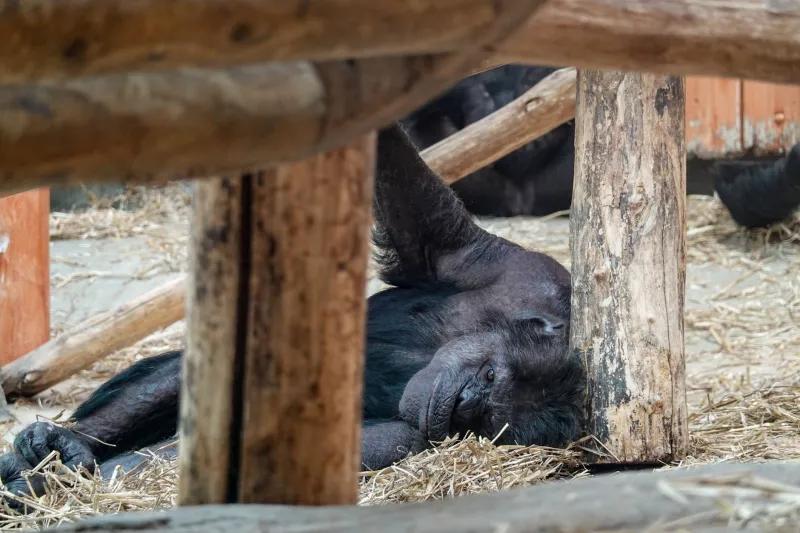
In 2026, more UK primate houses are pointing cameras at their animals and letting software do the first pass. The pitch is seductive: fewer hours squinting at footage, cleaner behaviour logs, and a dashboard that tells you when grooming, pacing or aggression is on the rise. But a label like 'grooming' is not a fact. It is a claim, produced by a model, trained on somebody's footage, and presented with a confidence score that may or may not mean what you think it means.
This is not an argument against automation. It is an argument for treating AI behaviour scoring like any other scientific instrument: useful, fallible, and in need of calibration. If you are a student on placement, a keeper asked to trial a new system, or a volunteer who has been handed a tablet and told to 'just check the alerts', here is how to keep your sceptical head on.
The dashboard is a colleague with no context
A human observer knows that the chimpanzee in the corner has just been moved from another group, that the heating failed overnight, or that the keeper is ten minutes late with the scatter feed. A model knows none of this unless someone has told it. It sees pixels and patterns. That can be genuinely useful for spotting changes humans miss, especially over long overnight periods. But it cannot tell you why the change matters.
So the first question is not 'is the AI accurate?' It is 'accurate at what, for whom, and under which conditions?' A system that is 90 per cent accurate at labelling grooming in clear daylight footage may be closer to 60 per cent in a leafy enclosure at dusk. That difference is not a minor technicality. It is the difference between a useful alert and a wasted keeper hour.
What the model is actually doing
Most commercial behaviour-scoring tools use computer vision to detect posture, movement and proximity, then map those patterns onto behaviour categories. Some also use audio to flag calls. The model does not understand primate social life. It has learned statistical associations from training footage. If that footage came mostly from one species, one enclosure type, or one time of day, the model will be better at some situations than others.
This is why you should ask for the training data description before you trust the outputs. Not the marketing summary. The actual description. Which species? Which ages? Which housing styles? Were the videos labelled by one observer or several? Were disagreements discussed, or did one person's opinion become the gold standard? If the answer is vague, treat the dashboard as a prompt for human checking, not a verdict.
Test one: the human baseline
Before a new system goes live, run a small human baseline. Pick three or four short clips that represent normal life in your primate house: a quiet grooming bout, a feed, a busy mixed group, and a tricky low-light scene. Have two experienced observers score them independently. Then compare their scores with each other and with the model.
If the two humans disagree more than you expected, that is not a failure. It is a finding. It tells you which behaviours are genuinely hard to define in your setting. The model's disagreement should be interpreted against that human variation, not against a fantasy of perfect objectivity. A model that is 'wrong' in the same way as one experienced observer may still be useful. A model that is confidently wrong in a new way is a problem.
Test two: the footage diet
Ask what the model has been fed. Training footage is a diet, and like any diet it shapes what the animal can do. If the system has mostly seen zoo primates in glass-fronted enclosures, it may struggle with mesh, foliage, mixed-species groups, or sanctuary setups with naturalistic planting. If it has mostly seen adults, it may misread juvenile play as aggression or grooming as climbing.
A practical check is to review the false positives and false negatives from a week of live data. Do the errors cluster around particular individuals, times of day, or enclosure zones? If so, you have found a bias worth reporting. Do not let anyone wave it away as 'the model learning'. Models do not learn from your dashboard unless someone retrains them, and retraining is a decision with ethical consequences.
Test three: the edge cases
Edge cases are where behaviour scoring earns its keep or loses its credibility. Look for the animals who are always flagged: the one who paces, the one who sits near the camera, the one whose coat colour confuses the motion detector. Look for the animals who are never flagged, even when a keeper knows something is off.
A useful exercise is to keep a simple shadow log for two weeks. Every time the system sends an alert, a human notes what was actually happening. Every time a human notices something important that the system missed, note that too. At the end, you have a local evidence base. It is small, imperfect, and far more useful than a vendor's case study from another country.
The awkward questions: consent, privacy and ownership
UK primate houses are workplaces and homes for animals. Footage may include keepers, volunteers, researchers and visitors. Under UK GDPR, that matters. Ask who owns the video, where it is stored, how long it is kept, and whether it is used to improve the model. Ask whether footage leaves the site. Ask what happens if the system is discontinued. A data protection impact assessment is not red tape for its own sake; it is how you avoid discovering three years later that your animals' daily lives are sitting in a cloud account nobody can explain.
Consent is trickier with animals, but the welfare question is still fair: does the camera change behaviour? Some primates notice lenses, cables and infrared lights. Some do not. If the system requires continuous close-up coverage, ask whether that is compatible with the enclosure's normal routine. Automation should reduce disturbance, not add a new source of it.
A practical checklist for 2026
- Ask for the training data description in plain English, including species, ages, housing types and labelling method.
- Run a human baseline with at least two observers before trusting live alerts.
- Review false positives and false negatives weekly for the first month, then monthly.
- Check whether errors cluster by individual, time of day, enclosure zone or species.
- Keep a shadow log so human observations can challenge the dashboard.
- Confirm where footage is stored, who can access it, and how long it is retained.
- Ask whether footage is used for retraining, and whether you can opt out.
- Check that camera hardware does not alter the animals' normal behaviour or access to space.
- Agree who is responsible when an alert is missed or misread.
- Write down the limits of the system in the staff handbook, not just the sales brochure.
The keeper still signs the log
AI behaviour scoring can be a genuinely useful assistant. It can watch the unwatched hours, surface patterns across weeks, and free keepers from some of the duller data entry. But it cannot carry the ethical weight of animal welfare decisions. That still belongs to people who know the individuals, the history and the context.
The sceptic's position is not 'never use the dashboard'. It is 'make the dashboard show its working'. In 2026, that is a reasonable ask for any UK primate house trialling a new system. If the vendor cannot answer the awkward questions, the answer is probably not yet.