Rub, Sniff, Repeat: Mapping Scent Routes in UK Primate Houses
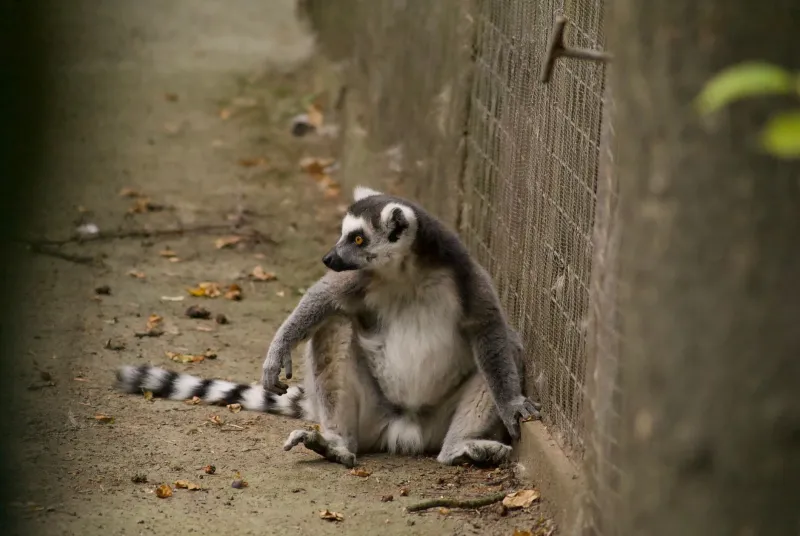
A ring-tailed lemur presses a wrist against a doorframe, pauses, then moves on. Ten minutes later another lemur does the same. Then a third. Nothing dramatic happens. No chase, no call, no obvious dispute. Yet in a UK primate house on a wet November morning, that small sequence is a conversation — and it is one that most of us walk straight past.
Scent marking is one of the most reliable ways primates communicate, and one of the least recorded. It is also a useful entry point for anyone who wants to turn everyday watching into something a keeper can actually use. You do not need a lab coat. You need patience, a pencil and a rough sketch of the enclosure.
What scent marking actually is
Primates leave scent in several ways. Some have specialised glands — sternal, brachial, anogenital, suprapubic — and rub them on surfaces. Others use urine or faeces, or mix scent with saliva. Callitrichids such as marmosets and tamarins are enthusiastic markers. Lemurs mark with wrists, genitals and sometimes chests. Other species do it less often or more subtly, which is exactly why a baseline matters.
The message can cover territory, individual identity, social rank, reproductive state or recent stress. A mark is not a shout. It is closer to a note left on a kitchen table: short, practical and easy to ignore if you are not looking for it.
That invisibility is the problem. Scent fades. Cleaning removes it. Keepers are busy. Cameras are usually trained on feeders or doors, not on the corner post where a marmoset has been rubbing its chest every twenty minutes. The result is a behaviour that shapes social life but rarely appears in the daily log.
First, stand still
Good scent-marking observation starts before any animal does anything interesting. Pick a viewing point that does not block a route or crowd an animal. Give the group five to ten minutes to settle. Keep your voice low. No tapping glass, no flash photography, no leaning over barriers.
Do not touch marking posts, branches, ropes or bedding. You are not trying to add your own scent to the conversation. If you have been handling food or other animals, wash your hands or use the hygiene point before you start. This is basic biosecurity, not fussiness.
Watch routes rather than individuals. Follow a doorframe, a shelf edge, a rope junction or a feeding platform and see who visits it. Note the time. Note what the animal does before and after. A quick rub and a move on is different from a long, repetitive sequence or a mark followed by a stare at another animal.
The route is the data
Scent marking is not random. Animals tend to mark posts that matter: entrances, exits, boundaries, high-traffic branches, sleeping areas, feeding areas and the edges of preferred space. Overmarking — one animal marking directly over another's mark — is especially worth recording. It can be a normal part of negotiation, but a sudden shift in who overmarks whom is the kind of pattern that deserves attention.
Sketch the enclosure. Number the marking posts. Then record a sequence: post three, then the doorframe, then the shelf, then back to post three. Over a couple of weeks you may find that one animal has a regular circuit while another barely uses it. You may find that marking increases before feeding, or when visitors pass, or when a new piece of browse goes in.
This is where citizen science earns its keep. A single afternoon tells you very little. A simple, repeated route map tells you what normal looks like for that group in that house.
Normal patterns and patterns worth flagging
A baseline is not a luxury. Spend two to three weeks noting ordinary marking before you decide anything is unusual. Normal marking is usually regular, spread across several posts, quick and followed by ordinary behaviour. Animals may overmark, but they also move away, groom, feed and rest.
Worth flagging to staff: a sudden jump or drop in marking; one animal being repeatedly overmarked; marking concentrated at exits or at a single spot; self-marking to the point of hair loss or skin irritation; rubbing on new surfaces after a husbandry change; avoidance of posts that were previously used; and marking accompanied by wounding, chasing, freezing, excessive grooming or a change in vocal behaviour.
None of those signs is a diagnosis. They are prompts for a conversation with the people who know the animals. Your log is useful because it shows a pattern in time, not because it proves a cause.
Husbandry changes the conversation
Scent is fragile. A full substrate change, a strong disinfectant, fresh paint, new browse or a deep clean can wipe the slate. So can a change in heating, ventilation or visitor flow. In UK houses, winter is a particular trap: doors close, humidity shifts, deep litter builds up and the indoor social map gets redrawn.
Ask keepers whether anything changed in the days before the behaviour shifted. Add that to the log. A marking spike after a new rope is installed may be normal investigation. A marking spike after a cleaning regime change may be worth watching. Either way, the observation is stronger when it is tied to what actually happened in the house.
A simple scent-trail log
Keep it small enough that you will actually finish it. Ten minutes every hour is often more useful than a heroic two-hour session that never gets repeated.
| Field | What to note |
|---|---|
| Date and time | Use the same slots each day if you can |
| Species and individual | Use keeper-confirmed IDs, not guesses |
| Post number | Match your enclosure sketch |
| Gland or method | Wrist, chest, anogenital, urine, saliva, unknown |
| Substrate | Wood, rope, glass, metal, bedding, browse |
| Duration | Quick rub, prolonged sequence, repeated returns |
| Overmark | Yes or no; who marked over whom |
| Response | Ignored, sniffed, approached, avoided, chased |
| Context | Feeding, cleaning, visitors, heating, new object |
| Observer | Your initials |
If two people can watch the same session, even better. Compare notes afterwards. Disagreements about what counts as a mark are useful; they sharpen the definitions.
The limits and the ethics
You cannot smell what a lemur smells. You are recording visible behaviour, not reading minds or measuring hormones. Do not present your log as a welfare assessment. Share it with the keeper or sanctuary staff and let them decide what it means.
Do not touch surfaces, do not transfer scent between enclosures, and do not bait animals into marking near you. Follow the site's rules, the Animal Welfare Act 2006 and any zoo licensing or BIAZA guidance that applies. If you see an animal in distress, stop logging and tell staff.
The next time you see a lemur rub a wrist on a doorframe, resist the urge to call it scratching. It just added a line to the house record. Your job is to read the route — quietly, repeatedly and with enough humility to know when to hand the pencil to a keeper.
For UK students and volunteers, this is a genuinely useful project: local, low-cost and close to the animals without being intrusive. It also produces the kind of longitudinal detail that a busy team rarely has time to collect. That is citizen science at its best — not replacing the keeper's judgement, but giving it a clearer trail to follow.