When the Drizzle Does the Reporting: A Wet-Day Guide to Primate House Notes
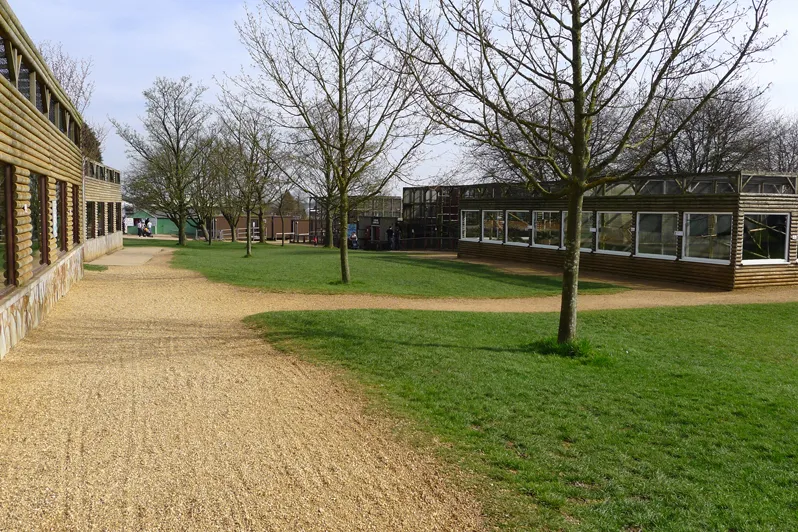
Photo: Cameraman , CC BY-SA 2.0, via Wikimedia Commons
On a wet Tuesday in November, a primate house can look like a lesson in patience. The windows steam up, the outdoor run turns slick, and a group of marmosets that usually fan out across every branch may collapse into one huddled knot near the heat lamp. To a casual visitor, it is just a quiet day. To anyone reading the keeper sheet, it is data.
Across UK collections, daily records quietly capture these shifts. Keepers note who went outside, who stayed in, when food was taken, where animals slept and whether social groups stayed close or spread apart. The trouble is that wet-weather entries are easy to skim past. Rain is so ordinary here that it can read like background noise rather than a variable worth tracking. That is a mistake. In a country where grey skies and sudden showers shape the week, wet-weather behaviour records may be some of the most abundant evidence we have about how primates use their enclosures.
Start with the baseline, not the weather
A single rainy day tells you very little. The useful question is not 'did the animals act differently when it rained?' but 'how did this rainy day compare with their normal range?' A primate that spends a wet morning in a heated indoor bay may simply be doing what it always does after a cold front. A primate that abandons a favourite feeding spot for three consecutive wet days is giving you something more specific.
So before you interpret the rain, find the baseline. Look at the same group in dry conditions, at the same time of day, with the same routine. If the records include indoor and outdoor use, activity levels and social spacing, you have a rough picture of normality. Without that picture, a wet-day entry can be made to mean almost anything.
What wet weather actually changes
Weather does not act on primates in a vacuum. It changes the enclosure first. Rain makes surfaces slippery, dampens scent trails, cools exposed concrete and can turn a browse pile into a soggy heap. Wind may make an outdoor run feel exposed even when the temperature is mild. Flat grey light can reduce contrast and make distant objects harder to read.
Those changes show up in behaviour. Some primates move their activity indoors. Some become more food-focused, especially if forage is scattered and harder to find in wet grass. Some groom more, particularly in huddled pairs or family groups. Others become less tolerant of close proximity when damp fur and cramped indoor space combine. None of these responses is automatically a welfare problem. They are ordinary adjustments to a changed environment, and the keeper sheet is where those adjustments become visible.
Three columns worth checking
The exact layout of a daily record varies between collections, but three kinds of information tend to be useful.
First, enclosure use. Did the group use the outdoor area at all? Did they choose the same sheltered corner, or did they spread through the indoor space? A sudden refusal to use a usually popular outdoor platform may point to a draught, a leak or a slippery surface. A gradual return to normal use after the rain stops is a reassuring sign.
Second, activity. Look for changes in feeding, foraging, play and rest. A wet day with more rest is not necessarily worrying. A wet week where play disappears entirely and feeding becomes hesitant is worth a second look, especially if the pattern continues after the weather improves.
Third, social behaviour. Huddling can be thermoregulation, comfort or both. Grooming may increase as animals settle indoors. But watch for a shift from loose tolerance to tension: more displacement, more avoidance, or a group splitting into separate corners. Social records are rarely detailed enough to diagnose a problem on their own, but they can flag where a keeper or researcher should look next.
The ordinary wet-day sulk
It helps to separate a damp-day slump from a genuine welfare signal. A normal wet-day response tends to be reversible. The animals use shelter, eat reasonably well, resume normal activity when the rain eases and show no lasting change in social structure. The record may look dull, but it is coherent.
A welfare signal is more likely to be persistent, clustered or out of proportion. Perhaps the group avoids an outdoor area for days after the rain has stopped. Perhaps feeding drops in the indoor bay but not elsewhere. Perhaps a low-ranking animal stops using a favoured resting spot because the wet-weather crowd has made it inaccessible. These are not proof of poor welfare, and no keeper sheet should be read as a diagnosis. They are prompts for closer observation.
When a wet week becomes a welfare question
UK weather gives record-readers an advantage: we get plenty of repetitions. A single shower is an anecdote. A wet fortnight, a windy spell and a run of flat grey days give you a natural experiment. If behaviour changes only during wet weather and settles afterwards, that is a useful environmental signal. If behaviour stays altered through dry days too, weather may not be the main story.
The key is to avoid over-reading. A primate sitting indoors on a rainy afternoon is not automatically stressed. A keeper writing 'wet, quiet, all indoors' is not automatically missing something. The record is a starting point, not a verdict. Read it alongside the enclosure, the routine and the animal's usual patterns.
A UK-specific advantage
In drier countries, wet-weather data may be scarce enough to feel special. Here, it is part of the furniture. That makes it easy to ignore, but it also means UK primate houses have a long, repetitive record of how animals respond to rain, wind and low light. For students and wildlife fans learning to read behaviour, that is a gift. You do not need a rare event to practise. You need a clipboard, a damp coat and the patience to compare one grey day with the next.
So next time the forecast turns, do not skip the wet entries. Look for the baseline, check enclosure use, activity and social spacing, and ask whether the pattern is reversible. The drizzle may not look dramatic, but it is doing some of the reporting for you.